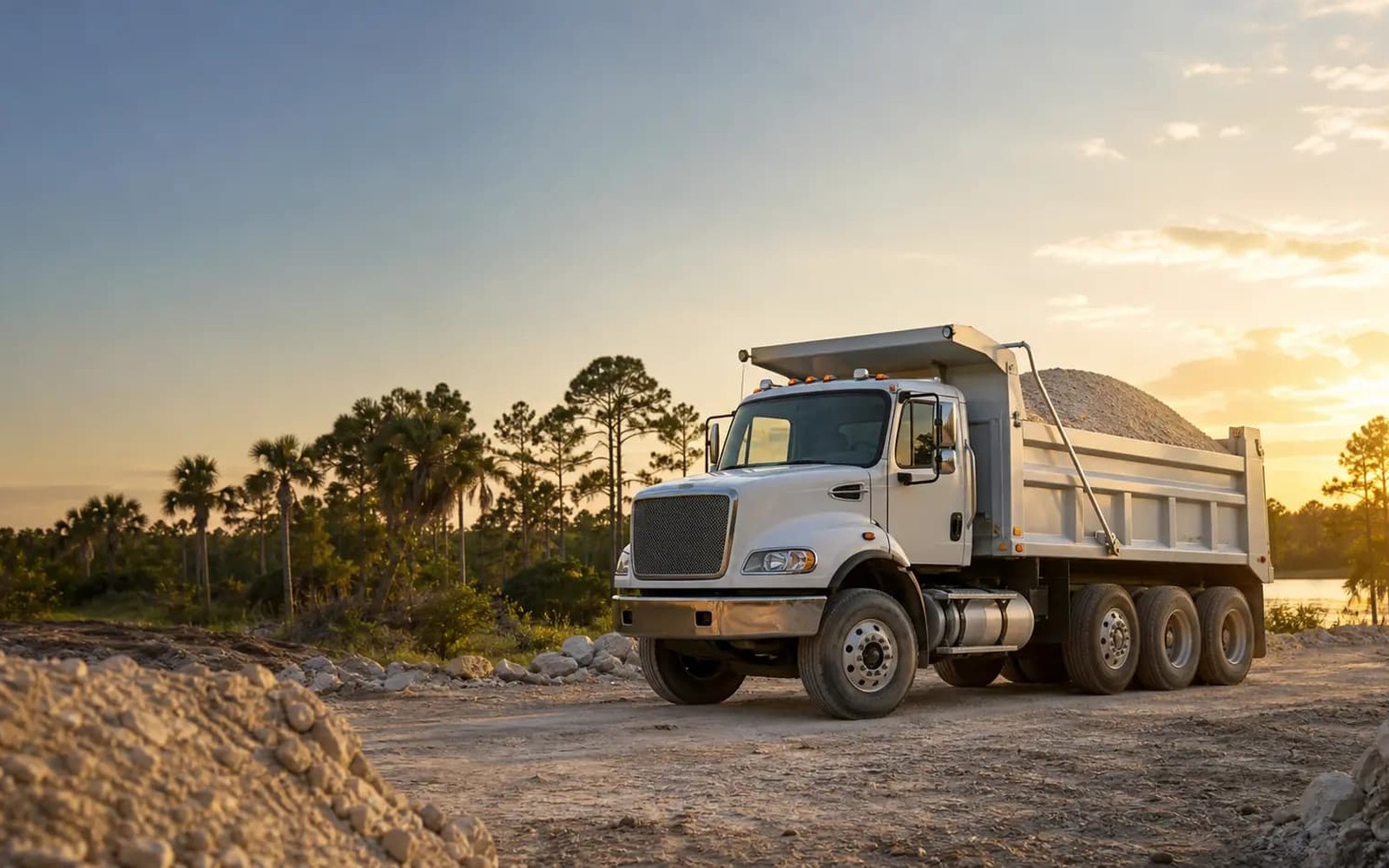

End dumps are the standard. When people say dump truck, they usually picture an end dump: cab forward, body that raises from the rear, material discharges out the back tailgate. Simple hydraulics, predictable maintenance cycle, and a configuration that fits on nearly every job site. Aggregate, fill dirt, road base, demolition debris, asphalt millings, and topsoil all move in end dumps every day across the country.
End dump trucks span the full Class 4 through Class 8 range, though most commercial hauling work runs on Class 8 chassis. A new Class 8 end dump from a major manufacturer runs from roughly $120,000 to $180,000 depending on how the truck is spec'd. Used examples start around $60,000 and rise sharply with lower mileage and better condition. The deal minimum we work is $50,000, and most commercial-grade end dump purchases clear that floor comfortably.
We finance end dump trucks for operators across aggregate hauling, road construction, and excavation and grading operations. Application-only approvals are available up to approximately $400,000, so you do not need a full financial package to get the conversation started.
End Dump Mechanics and Financing Implications
The end dump's rear-discharge design concentrates the unloaded material in a pile directly behind the truck. That works well on most construction sites and aggregate yards where the material can be spread or pushed from a concentrated pile. The hydraulic cylinder that lifts the body is simple and well-understood by most shop mechanics, which keeps maintenance costs predictable.
Body material affects both the truck's capability and its long-term value. Steel bodies handle rock, concrete rubble, and abrasive demolition material without significant wear to the body panels. Aluminum bodies are lighter, which means more legal payload per load, but they dent more easily on hard aggregate work. The financing treats both materials the same way; the choice is operational.
End dumps with larger body volumes (typically 16 to 20 cubic yards on Class 8 chassis) can haul more volume per load of lighter materials like topsoil or mulch. Smaller bodies carry more weight per cubic yard of dense aggregate. Most operators spec the body based on the primary commodity they haul. Lenders are not particular about body size in underwriting; they focus on the chassis, year, mileage, and overall condition.
An end dump paired with the right tractor brand does most of its work efficiently. Peterbilt and Kenworth end dump configurations are among the most commonly financed Class 8 setups in the country for vocational hauling work.
Who Buys End Dumps
The list is long because the configuration is versatile. Aggregate contractors, asphalt base suppliers, fill dirt haulers, demolition debris removal operators, ready-mix support trucks, site development crews, and road construction subcontractors all run end dumps. The truck's simplicity makes it the starting point for most operators entering the hauling business.
Owner-operators buying their first truck nearly always start with an end dump because it accesses the widest range of work, requires no special trailer knowledge, and has the lowest barrier to learning the equipment. A single CDL Class A driver can run an end dump on day one without a learning curve on combination vehicle handling.
Fleet builders add end dumps to fill capacity on aggregate or material hauling contracts. A fleet of five end dumps wins contracts that one tri-axle cannot service alone. The standardization of the configuration means drivers can switch trucks without retraining, and mechanics can work on any truck in the fleet with the same knowledge base.
Getting Approved on an End Dump Deal
Standard documentation: application, three months of business bank statements, truck details. Lenders want to see that the business deposits can absorb the new payment comfortably. For most end dump deals priced roughly $80k–$150k, three months of deposits showing consistent revenue are the key underwriting input alongside the credit score.
B and C credit operators finance end dumps regularly. Credit scores in the high 500s and 600s close with the right combination of down payment and cash flow history. We also work with operators whose credit issues are old and whose current business performance tells a different story. Age of the derogatory items matters in how lenders weight them.
If you are buying used from a private seller, bring the seller's contact information and a bill of sale. We need to verify the title is transferable and that no existing liens encumber the truck. Private-party deals close; they just require a few more steps than a dealer transaction. Private-party purchase financing is something we handle regularly.
End Dump Financing Questions
What operators ask most frequently before they submit.
Get Your End Dump Financed
Tell us the truck, the price, and your operation. End dumps are the most common deal we see, and we close them fast. Apply and get funded in about two weeks.